Mailing List

Subscribe to my highly unannoying monthly mailing list:

Matt Roberts' Music Blog

Showing posts with label u of t masters in jazz. Show all posts

Tuesday, September 6, 2011

Composers' Process Project: Wrap Up and Analysis

For those of you just tuning in, the Composers' Process Project is an assignment I'm doing as part of my masters in jazz at U of T.  I've interviewed five composers (six if you count the interview with myself), transcribed the interviews, and posted them on this blog (click here to see all the related posts).  This post will formally conclude the project (and all my course work for my masters!), although I may post interviews with artists on this blog in the future. I've learned a lot - sometimes about unexpected things. For example, I learned a lot about how to conduct an interview! I really enjoyed doing this project, and I found the whole process very beneficial - even the part where I was just typing out the dialogue, which was what I spent most of my time doing, as it turned out.  Despite being time consuming, it gave me an opportunity to reflect on what had been said. It amazed me how much I missed in normal conversation - people were trying to tell me things that I totally didn't pick up on until I listened back to the recording and wrote down every word!

That was what I got out of the process... what did I actually learn from what people said?  There is a lot to summarize - the interviews together take up 51 single-spaced typed pages, and that is just the edited-down versions!   I'll start with the most concrete observations and progress to more abstract conclusions.

Word-Frequency Analysis

Here is an analysis of the frequency that various words appeared in the conversations.  I picked words that appeared in more than one interview:

112  music
 59  idea(s)
 46  jazz
 39  listen/listening
 36  sound
 32  piano
 25  chord
 17  love
 15  enjoy
 14  language
 14  voice
 12  classical
 12  mind
 10  pretty
  9  clarity
  9  weird
  8  beautiful
  7  Stravinsky
  6  Ellington
  5  Bartok
  5  Wayne
  5  Metheny

Recommended Books

Me: The Gifts of Imperfection, The Creative Habit
Dave Wall: Techniques of the Contemporary Composer, Theory of Harmony (Schoenberg), My Musical Language
Andrew Downing: The Shaping Forces In Music
Alan Gilliland: Jazz Arranging and Composition: A Linear Approach, What To Listen For In Music, The Study of Orchestration, Inside The Score, Composer to Composer, Charles Ives: A Life With Music, Gil Evans: Out of The Cool: A Life With Music, Hallelujah Junction, Bela Bartok: An Analysis of His Music
Christine Bougie: The Creative Habit, On Writing (Steven King), Songwriters on Songwriting

David Binney was the only one who didn't recommend any books, saying only "I've never studied any of it."

Admired Composers

Here is a list of the composers that people said they admire:

Matt: David Binney, John Coltrane
Dave Wall: György Ligeti, Steve Reich, Arvo Pärt, Xenakis, Alfred Schnittke, Todd Sickafoose
Andrew Downing: Stravinsky, Shostakovich, Prokofiev, Bill Frisell, Alfred Schnittke
Dave Binney: Wayne Shorter, Stravinsky, Aaron Copland, Pat Metheny, Joni Mitchell
Alan Gilliland: Stravinsky, Prokofiev, Shostakovitch, Debussy, Richard Strauss, Mauler, John Corigliano, John Adams, John Williams, Korngold, Bernard Herrmann, Art Herman, Michael Giaccino, Ellington/Strayhorn, Gershwin, Bernstein, Metheny
Christine Bougie: Joni Mitchell, Ry Cooder

As we saw earlier from the word-frequency analysis, Stravinsky is a popular composer - his name was the first word out of Andrew Downing & Alan Gilliland's mouth, and the second composer mentioned by Dave Binney. Ellington/Strayhorn, and Wayne Shorter were also spoken of with reverence. Shostakovich, Schnittke, Prokofiev, Metheny, and Joni Mitchell all got repeat mentions as well. I'm a little surprised Bartok didn't figure more prominently - I always thought he was the Mt. Everest of 20th century composition. Of course, as Dave Binney pointed out, it is a "mind-boggling" question; it is impossible to list all the composers that one's been influenced by.  For example, I know from her blog Christine Bougie is a big fan of Bill Frisell.

Routine/Compositional Phases

David Binney was the odd one out here. He didn't admit to following any routine - he said he used to write very late at night until the early morning, but now he may write at any time of the day - and he also insisted, despite me prodding him with repeated questions, that his compositional process does not follow any phases -   "I basically put my hands on the keyboard and I just start writing."

Everyone else said that phases like research, planning, brainstorming, editing, proofreading, etc. are a part of their process. Alan Gilliland had an elegant way of putting it - "The Three C's of Composition" - Creativity, Craft, and Copying.

A common thread among those whole follow a routine is that the morning is an important time for creativity. Alan Gilliland has had a habit of composing from 5-7 am for over a decade. Christine Bougie avoids checking e-mail until the afternoon so that her mind can be clear for creativity. Dave Wall says "I just get up and I start writing." I liked what Dave Wall said about not forcing himself to compose for an extended period - instead, he composes only as long as he feels like it, and strings together many sessions that might range in length from 5 minutes to 2 hours. David Binney and Christine both alluded to similar approaches.  I've tried to practice Dave Wall's technique since the interview, and it's worked well for me so far. For those of us who lack the discipline to follow a routine like Alan's - for example, me - Dave Wall's approach might a workable solution.

What do you consider the most important principle(s) of good composition?

This was a difficult question, but it was one that I ask myself a lot.  When something is good, why is it good? That's the mystery.  I really do believe that there is something similar going on with all my favorite compositions - from "Blackbird" by the Beatles to Cello Prelude #1.  Defining what that is, however, turns out to be a difficult task.

Me: Elegance
Dave Wall: Clarity
Andrew Downing: Consistency (details of a composition that makes it feel like itself)
Dave Binney: "just whether I enjoy it or not"
Alan Gilliland: Clarity

It seems somewhat remarkable that both Alan and Dave Wall chose "clarity" out of all the available words in the English language.  Does it have something to do with the fact that they are the two "classical" composers? In a broader sense, there did seem to be a theme of clearly communicating something to the audience, with Dave Binney again being the odd one out.  He insisted "I'm seriously not ever judging music other than if I like it or not."

Have you experienced composers block? How did you deal with it?

The thing that got this whole project started was my struggle to overcome composer's block, so I was pretty surprised that the general response to this question was to shrug and say "not really." However, I still got some useful advice when people explained what they felt was the reason for them not experiencing it.

Me: yes. acknowledge your fears and decide to proceed anyway
Dave Wall: no, ideas are a dime a dozen
Andrew Downing: no, even if you end up throwing things away, that's still part of the process
Dave Binney: no, it is just easy for me, it is my natural language
Alan Gilliland:  no, even if you end up throwing things away, that's still part of the process

As you can see Andrew and Alan both had similar things to say.  I think their point of view could help me avoid becoming negative during my process. Also Dave Wall's point that the important thing is how you develop your material, not what you start with, seems a good bit of perspective. Overall, I was struck by how nonchalantly everyone answered "no". It changed how I thought about the creative process. I may have felt like suffering a bit was an important part of it, but it seems more like good music comes from enjoying yourself. Dave Binney in particular - one of my favorite composers - talked about how much he enjoyed the entire process, from composition to performing to recording to listening - and how he was driven by his love and excitement for music.

What mistakes do inexperienced composers make?

This one surprised me because of how little agreement there was. I guess there are a lot of mistakes to make! However, there did seem to be a common theme that inexperienced composers do not develop themes and use repetition enough, and end up putting too much stuff in.


Me: "over-doing things"
Dave Wall: too much material, not respecting the use of repetition
Andrew Downing:  don't think about the total sound, don't think about the instrument
Alan Gilliland: don't stick with a theme/idea; lack notation skills

What do you find to be the greatest challenge of composition?

There was little agreement on this one as well - even more so. It seems everyone finds composition challenging in a different way.


Me: overcoming my fears and anxieties
Dave W: "To never be boring. To keep it unified, but always changing."
Andrew Downing: to let go of a piece and stop revising it; to not be derivative
Alan Gilliland: keeping the business side of things going
Christine Bougie: writing from the place that I am yet not to repeat myself


Why compose?


There were a lot of answers for this one.  They included (in order of my subjective judgement of popularity): the joy of having created something uniquely your own, enjoying the act of composing, expressing something you couldn't otherwise, and curiosity about music.


How do you want to develop as a composer in the future?

Again there were a lot of different answers for this one.

Me: connecting to audience through mastering form
Dave Wall: have a tangible effect on audience
Andrew Downing: be better about thinking about forms
Dave Binney: "I don't have any goals with it, I just want to keep kind of moving forward."
Alan Gilliland: explore jazz & classical music


Themes and General Impressions


Each interview made an impression on me and left me with many things to think about.  For example, with Christine, the word I left with was "honest", which she used several times in our conversation. I'd never really thought about whether or not my compositions were honest - just whether they did what I wanted them to do!  (Dave Wall also used the word "honest".)  I think the most exciting interview for me was Dave Binney, because I'm such a big fan of his music, and I do want to emulate some of his style, and I have actually spent a lot of time wondering "How does he make this stuff? What is he thinking? What is his process?" I feel like I have a better understanding on that, although it seems like it is a bit of a mystery to Binney as well - which may be key to why his compositions are so fascinating to me, as I also find they have a sense of mystery to them.

There were also several themes that I noticed over all the conversations. One was the debate of writing for the instrument - i.e. with the instrument in mind first, coming up with something that is easy to play on that instrument - vs. writing for the sound - i.e. thinking of what sound you want first, and then thinking about how to make instrument(s) produce that sound.  Other issues that had to be considered included:

  • trying to be yourself or to not overdo things vs. trying to push yourself or discover new possibilities
  • imitating or emulating other composers vs. trying to be original
  • writing for yourself vs. writing for the audience
  • experiencing the piece moment to moment vs. experiencing the piece as a whole
  • the language, values, and traditions of jazz vs. the language, values, and traditions of classical music

One thing that unified everyone was the idea of finding an original voice. Which reminds me of something I said to Alan in what seems to be, looking back, a moment of clarity for me: "I'm more interested in just getting the courage to check out those twelve notes on my own. I've been to school for ten years, I know tonnes of theory, I just need to inspire myself to find my own ways." This assignment concludes my Masters Degree in Jazz Performance. On to new adventures!
Back to MattRoberts.ca.

Friday, August 5, 2011

Interview with Composer Andrew Downing

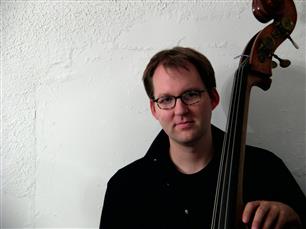
Andrew Downing is a double bass/cello player, composer and bandleader living in Toronto.  He graduated with a Bachelors in Music (Jazz Performance) from the University of Toronto in 1996, and more recently graduated from U of T's Masters in Music (again in jazz) program as well.
Andrew plays primarily in the creative jazz scene in Canada, but also performs classical chamber music, improvised music, folk and roots music and world music. He received a Juno Award, a West Coast Music Award  and The Grand Prix de Jazz with his former band The Great Uncles of the Revolution, as well as another Juno Award, a SOCAN award and a West Coast Music Award with Vancouver collaborators Zubot and Dawson.
As a composer, he has written pieces for Ensemble Meduse, Toca Loca, Runcible Spoon and the Urban Arts Brass Ensemble as well as many works for his own groups. Lately he has become interested in writing music for silent films in a "chamber-jazz" style.  This music is featured on his most recent CD, Silents.

To learn more about Andrew, and to hear samples of his most recent music, visit his website AndrewDowning.com. You might also want to check out the page for The Great Uncles of The Revolution.


The following is an interview I did with Andrew, as part of my ongoing "Composers' Process Project", where I interview a variety of composers about how they do what they do.


Matt Roberts: What mistakes do inexperienced composers make?

Andrew Downing: There are a couple of things.  They don't think about the total sound, in that they think about a particular melody, set of chords, or rhythm, without thinking about how they're all going to fit together. Further to that, they don't necessarily think about the instruments involved. Writing a melody that fits on a horn, or feels a certain way on an instrument is really important, and I think a lot of people go at it from the other direction, where they write something and then try to sort of shoe-horn it into what a certain instrument can play. It doesn't always make it easy for the instrumentalist, and ultimately the composition might not be as successful as it could be because of that.

MR: Obviously it takes a lot of experience to be familiar with so many instruments.

AD: That's very true. But there are a ton of books out there, and a ton of recordings, and a ton of people to ask, and an inquisitive person is always the better for it. The best way to learn is to talk to someone who plays an instrument.

Another thing that inexperienced composers do is they throw out a lot of stuff without fully checking it out. If they write something and it doesn't seem to work at first, they don't necessarily check it out to its fullest extent before moving on. If something comes out of your brain and your musical mind, there's a reason for it, and if you don't really check it out to as far as it could go, then you might have missed an opportunity to have something really sound like yourself.

MR: How have you grown as a composer?

AD: I once had a discussion about seven years ago about what the role of a working, band-leading jazz musician is. We all say "We're composers!", but really, if you talk to a classical composer and compare what a typical jazz composer and a typical classical composer does, they're very different things. At one point I decided "Well, I'm more of a 'writer of music' than a composer." I know it's just a semantic discussion but there is a lot that goes into the word composer.

One way that I've grown is in really thinking about instruments and making stuff for the instruments that work for the instruments and have a particular sound.  Knowing different chord voicings on a piano is a really important thing, but if you voice it out for a bunch of instruments, the timbre of each note is going to make the colour of the chord different. Learning how to manipulate that has been a big thing.

Another thing is checking out different styles of music. Not necessarily that I'm going to write something that sounds like Turkish music, or Country music, but I think checking out the aspects of a style of music and trying to take what I like from it and incorporate it into my own sound has been a big learning thing.

MR: What do you consider the most important principle(s) of good composition?

AD: Consistency.  By that I mean thought that goes into the details of a composition that makes it feels like itself.  Consistency could even be inconsistency. John Zorn, for example, has done a bunch of stuff where he will flip from one style to another, but the consistency with which he does that makes for a good composition. Even in people like Schnittke, who very obviously incorporates a bunch of styles into the music, what ends up happening is that there is a something in that music that feels consistent while he does that. I think thinking about consistency in every aspect of the music is important - how a form works, how chord colours work, and intervals, and all that kind of stuff, it all plays into how consistent a piece of music feels.

MR: Not that you need to always use the same voicing, but just that you have to consider how everything relates?

AD: Yeah, and if you're going to move from one chord to another, you realize that that move should be compensated for in some way.

MR: My answer to this question was "elegance" which maybe I mean in the same way as you mean "consistency". To me elegance means there is a central unifying idea, and even if the work of art may be on some level complex, in some way it is also the simplest way of conveying that idea.

AD: Yeah, you're right. With jazz composers, I think of Duke Ellington as someone who was like that. His tunes sound like themselves.  In most of his and Billy Strayhorn's tunes there is something going on that defines them, even if you might hear them in the midst of improvising. It's noticeable. When you stand back when you're listening to something and experience it as a whole, I think that kind of consistency is noticeable.

MR: Have you ever experienced composer's block, if so, how did you deal with it, what do you think causes it?

AD: I'm not sure if I've really experienced that. There are times when I've had a tough time dealing with certain things that I want to finish. I think if you power through and try to work and get yourself frustrated, when you leave and then come back, all the things you were frustrated with before serve to make the composition come out. Even all the frustrating work you do on something is still going to be there when you come back to it. And even if it means that you discredited a bunch of things that you worked on, at least that what's you've done, and so when you come back you know what you don't like.  I think it helps to get things rolling to keep working, just to keep doing it and realize that not every day's worth of composition is going to be used, but it all serves the big purpose of getting something done.

AD: Another thing is leaving things blank.  Once with the silent film thing I had six minutes to fill, and I had a few stabs at it and it just wasn't working out, so I left it and moved on to the next part, and the stuff in the next part gave me some ideas for the part I was stuck on. So if you sort of have a map of what you're doing, you can move on and do what is after it, and that may give you a better perspective on the part you are having difficulty with.

MR: What do you find to be the greatest challenge of composition?

AD: Finishing a piece of music. There are two aspects of that that are difficult. One is letting it go. Every time I hear something I write, I want to change some things.  But finishing it, letting it go, and realizing that it is okay not to change the mistakes I've made, or the mistakes I believe I've made in my mind, allows me to move on and write something knew.

The other thing is to not be derivative. We compose music because we love music. I'm guilty of this - I write things in the style of other people. I don't consciously or academically try to do it, but I know that unconsciously I often have some composer in mind who informs everything that I do. And I think everybody does. Someone said "Good composers borrow, great composers steal." [ed. note: Stravinsky] And it totally makes sense. These days, Stravinsky is the big one that I listen to and in the last piece I wrote I thought "This sounds so much like a section from A Soldier's Tale." So I just put in a quote from it - "I may as well just admit it!" I do that the same with titling tunes - I title after the person from whom I've gotten the inspiration in some kind of cryptic way, but I like to admit "This is where this comes from." But that's a challenge to like what you're doing but know that it's based on someone else's thing.

MR: What is your compositional process? Does it have distinct phases? Do you follow a routine?

AD: The nuts-and-bolts are that I sit a piano, or in my case at home I have a Hohner Electra-piano and a pump organ.  The Electra-piano is a little more percussive than the pump organ, so if I'm thinking of something that might be for strings, I might use the pump organ, because it has that quality. Usually I write on paper, so I sketch out a bunch of ideas, and then I work them in computer.  I'll have different voices on the paper.  I write it all on a double staff, and I'll put little arrows to show where the voice leading is going to go.  And then I enter it into the computer, and sometimes I edit it in the computer. The thing I don't like to do too much is listen to things in the computer, because I think it gets deceptive, or at least it hinders my ability to use my imagination as much as I'd like to.

At the beginning of the process I like to think about form. If it is a tune, I think about the form of the tune, and what the improvising is going to be, and how the tune can have completeness in itself.  If I'm writing a longer piece of music, I think in a longer form.  I think about how I'm going to plan out an exposition, etc.  I don't always stick to it; sometimes the ideas warrant a different thing.  But I feel like if I have a map laid out that I can kind of plug things into, I get it done more easily.  Which is also why I like doing the silent film thing so much, because the form is laid out for you.

MR: Do you have a daily routine?

AD: No. The only thing is that I get my best work done when I have a whole day with nothing to do in front of me.  If I know I have a rehearsal at two o'clock in the afternoon, I find it hard to write music from ten until two.  I feel like my mind isn't clear enough.  But if I don't have anything until the next day, then I can work completely contentedly.

MR: Do you have any stratagems for composition?

AD: If I write something that I like, I will look at it from all angles. I will dissect and analyze, even if it is just a three-note motif. I'll find out everything I possibly can about it; I'll find out why I like it. It may be the intervals, it may be the rhythm, it may be the texture, it may be the stylistic stuff. Usually, other things will jump out if I just keep at it.  If I just play a three-note motif backwards, forwards, all together, really slowly, really quickly, in different octaves - if I just play it a whole bunch of times - I'm going to find some other stuff about it that I like.  And that also deals with the consistency thing - if something comes from something else, then it has a thread.  Even if the listener doesn't quite hear it, the thread is there.

MR: Where do your ideas come from, how do you generate new ideas?

AD: A lot of them come from other composers. A lot of my melodic ideas come from text - a poem, a line in a movie, or something someone says that has a certain rhythm and melody to it. Often I'll develop a new piece of melodic material with the idea of singing the thing the person said. Not in a complicated way, just naturally.  For example in the my most recent silent film composition, Maciste In Hell, most of the melodies come from the text in the film.  For example. there were two main themes. One of them was just "Bar-ba-ricc-i-a" [the name of the main antagonist].  The other one is from a line where our hero sees the prince and he says "Think of your innocent child."  Both of these themes are everywhere.

MR: What composers do you admire and why?

AD: Stravinsky is my number one at the moment.  There is a great deal of style in what he does.  He wrote a ragtime, he wrote a jazz piece - they all sound like him.  He takes little things from styles and put them in his own way. I really admire that. I think it's funny and I think it's quirky and weird, and it is also beautiful. I like his ideology of putting stuff together, and it is so well crafted, and it is also humorous, heavy and light at the same time. There's something about it. 

MR: I feel the same way about Bartok - his music comes across as being very serious, but I feel like really he is was just playing.

AD: I think Bartok's humor is in a different way.  It might also be an Eastern European thing. Shostakovich is very serious music, but I think a lot of his melodies and the ways he deals with them are quite playful. I enjoy laughing while I'm listening to his music. And I don't think it is wrong!  Prokofiev is another good example - he has tonnes of fun, weird stuff in his music.

MR: Are there any particular pieces of Stravinsky's that you admire?

AD: Solider's tale is my favourite one. There's so much I like about it, stylistically and compositionally. It was written for something else - a story - which is something I really like. Also, the instrumentation is so odd and cool.  I like the themes.

Another composer I really like is Bill Frisell. It's on a different level, but I sometimes get the same feeling listen to Bill Frisell's music. Stylistically it really comes from a certain place.  It's humorous.  He has such serious craft and serious way of playing behind everything he does - I don't mean serious as in somber, but it is very studied.  But it is so much fun, there is so much humor behind what he does.

MR: I sort of already jumped ahead to this, but what compositions do you admire, and why?

AD: Schnittke's third string quartet has a bunch of stuff in that is also derived from taking styles and thinking about styles.

MR: Why compose, what is the reward of composition? Is it pleasurable? What is the most pleasurable part?

AD: One of the big rewards is making something.  Like, you know when you were a kid, you liked making stuff - with clay or play-doh or whatever. That's one of the things about writing a piece I really love. When I hear a piece I wrote, I have pleasure from having made something, having constructed this thing out of just tools, things that I know.

I also really like the problem solving aspect of it. If I have to get from one place to another in a composition, to think about the tools that I have and finding a way to do it using my ear, and using theory, and other people's ideas to get from one place to another in a way that I like.

MR: Can you recommend any books, DVDs, etc?

AD: The Ernst Toch book [The Shaping Forces In Music] is kind of interesting.  He just talks about musical ideas as a composer. It's sort of about blowing apart the rules, or at least using the rules to find your own way to do things. It just talks about music in a very beautiful and open way.

MR: What composition are you most proud of and why?

AD: Well, currently, I'm most proud about my most recent composition! [A score for 7-piece chamber-jazz ensemble for the silent film, Maciste In Hell.]  Because it has all the stuff I'm most excited about recently.

MR: I feel the same way - my abilities are always increasing, so I always feel like my most impressive composition is one that I've done fairly recently. But is there any composition you can think back to where even though it might be more simple, you feel you just miraculously got it right some how?

AD: Yeah, there is one called "The King of America". It's a really simple tune.

MR: I like the title already!

AD: Well, I stole it from Elvis Costello. There is a rhythmic thing that happens in it that I stole from a tune from his record "The King of America."

MR: How would you like to develop as a composer in the future?

AD: I would like to be better about thinking about forms.

MR: Do you mean like having a sense of balance in the forms?

AD: Yeah, or at least letting things play out with a sense of patience. I feel like I'm good at writing things that are short, and things that are a vibe.  I feel like I'm good at writing a moment that feels like something, but if I were to work on doing something better, it would be to consider things better over the long form.

Back to main blog page.

Thursday, April 14, 2011

Little Prince Suite World Premier - April 16th, 5:15pm!


Hey, this Little Prince thing is really happening! Soon! This Saturday in fact!

The Little Prince Suite is a project that I've been working on for over two years, and it is finally ready for it's premier - this Saturday, April 16th, at Walter Hall.  The suite is a continuous hour-long, seven-movement composition, featuring my jazz quintet Circles along with a string quartet.  It tells the story of the little prince from the much-loved book by Antoine de Saint-Exupery. It will feature short excerpts from the book (read by the musicians) as well as images from the book, projected behind the band.  If you really want to know all the details, check this site, which I constructed for the musicians

Did I mention it is my graduation recital, which wraps up my studies in the masters in jazz program at U of T?

Anyway, it is going to be amazing, and I hope you can come!

Back to main blog page.

A Shout Out To All The Music Theory Nerds

(I'm not sure how many "clicks" I'll get with that title, but what the heck...)


Page from "Be Here Now"
I've always liked certain chord progressions in modern jazz, and I felt like there was some common thing that I liked about them, but I didn't understand what it was.  I wanted to figure that out, not only due to general curiosity, but also so I could improvise over them better, and use those harmonies in my own compositions.  The result was an essay I did as part of my masters degree at U of T, analyzing two compositions by Canadian-born trumpet player/composer Kenny Wheeler, and two composition by my friend and Circles-bandmate, pianist/composer Hayoun Lee.  The essay was titled "The Flimsiest of Screens: Moving Beyond Traditional Harmony In The Music of Wheeler and Lee".  The title is a reference to a quote by the American philosopher and psychologist William James which I had read in the book "Be Here Now".

Our normal waking consciousness is but one special type of consciousness, whilst all about it, parted from it by the flimsiest of screens, there lie potential forms of consciousness entirely different. We may go through life without suspecting their existence, but apply the requisite stimulus and at a touch they are there in all their completeness.

This is an analogy for me about key to understanding this particular type of harmony I was interested in: it was just taking harmony we were already familiar with, and adding just one or two more elements to create a whole new effect.  I made the point that "The comparison is not entirely metaphorical, since music with different harmonic languages will inspire different states of mind, and vice versa."

Anyway, I was pretty happy with the approach to analyzing this new harmony that I ended up with.  Modern harmony feels less mystifying to me now.  I think it is an approach that is practical for the jazz composer and/or improviser.  In jazz, it is very important that we can "hear" a chord progression, but what do we mean by this? I would contend that one of the main things we mean is that we are aware of the voice-leading. So my analysis centers around that - both with scales and chords.  I like the idea I came up with of thinking of scales as having a kind of family tree, where the modes of melodic minor are related to the modes of the major scale, and the symmetrical octatonic scales are related to the modes of melodic minor through "splitting" one note of the melodic minor scale, and the wholetone scales are related to the modes of melodic minor through "merging" one note in the melodic minor scale. Anyway, now we are really getting nerdy.  Read the whole essay if you are sufficiently interested.  There may be a few small factual errors remaining in it. If you find one, let me know, you win a special prize!

If you want to listen to the compositions analyzed in the essay, here are some YouTube links to the Kenny Wheeler tunes:

Gentle Piece
Everybody's Song But My Own

As for the Hayoun Lee compositions:

"Pegasus" is the first song that loads when you visit Circle's website.
To listen to "Autumn Dance", check out our bandcamp page.


Back to main blog page.

Monday, March 28, 2011

An Interview With Myself About Composition

As part of an independent project assignment for my masters degree at U of T, I'm going to be interviewing composers about their views on creativity.  I needed a guinea pig to try out the questions on, so I started by interviewing myself!  If you are a composer (or writer, or whatever!) and want to be part of my project, please feel free to copy these questions and send your answers to me at matt@mattroberts.ca.  I found it pretty fun actually... hopefully my interviewees will feel the same! (If you have any suggestions for questions I could ask, please leave a comment!)
  • What mistakes do inexperienced composers make?
      I consider myself to be an “inexperienced composer”, so I probably lack the perspective to properly answer this question, but I'll take a stab at it anyway. I have noticed that inexperienced artists in many genres often make the mistake of over-doing things. They throw everything they know how to do into each work, because they have just discovered things and are so excited about their newly-acquired abilities. The result is that the work loses its effect because it has no subtly or unique character.
  • Do you think you have grown as a composer over your career? How?
      I think I've grown tremendously over my “career” as a composer. My compositions have become much more complex and elaborate. I've also become much more comfortable writing scores (vs. leadsheets) for large ensembles. Whereas before say about 2006 my writing (especially for large ensembles) was mostly focused in trying to imitate others, now it is more focused on trying to discover a unique sounds. Also, I've gained some insight into my own compositional process, which allows me to make creativity a scheduled activity, whereas before it was more a case of “waiting for the miracle”.
  • What is the first thing that comes to mind when you think back about the most important factors that contributed to your development as a composer?
      Studying Bach chorals with Bill Richards at Grant MacEwan, and arranging class with John MacLeod at Humber. And performing my own compositions over and over again. I have had the benefit of encountering many wonderful teachers. I think their encouragement was even more important than the information they gave me. They gave me the courage and the impetus to investigate things for myself.
  • What do you consider the most important principle(s) of good composition?
      ELEGANCE
  • Have you ever experienced “composers block”? If so, how did you deal with it? What do you think causes it?
      I think that “composers block” is basically the off-stage version of stage fright. Basically when your fear of creating something overtakes your motivation to create, you have a block. I experience this all the time. I have a lot of little stratagems for dealing with it (some of which I've outlined on this blog). Ultimately, however, I think you have to just acknowledge your fears and decide to proceed anyway.
  • What do you find to be the greatest challenge of composition?
      Well, initially I definitely find overcoming my fears and anxieties to be the greatest challenge. Aside from that, the greatest challenge is to achieve that “elegance” – to arrive at a work that feels like a cohesive whole, rather than a sum of parts. Something that is properly balanced and has the right effect.
  • What is your compositional process? Does it have distinct phases? Do you follow a routine?
      I wish I followed a routine, but I seem to lack the discipline to keep one for more than a few weeks. I think most processes for the type of music I'm writing lately probably go through the same phases: research, brainstorming, realization, editing, and performance/review.
  • Have you developed any stratagems for helping your composition that come to mind and would be helpful to pass along?
      One thing I discovered lately and found hugely important is that during the brainstorming process, I try to make a point of writing down all the ideas I come up with – whether I think they are good or not. This is much more encouraging then just staring at a blank page telling yourself all your ideas are bad, and often some of the ideas you originally thought were bad turn out to be useful, or to lead to something that is useful.
  • Where do your ideas come from? How do you generate new ideas?
      My compositional ideas come from all over – playing bass, fooling around on the piano or guitar, singing, playing with theoretical ideas. Often I'll steal ideas from music I'm studying or playing. There is usually some kind of theoretical idea that is tickling my cranium at any given moment, so often compositional ideas will come out of that. Sometimes ideas come from stories or pictures or events in my life. Often I structure my compositions in a programmatic/tone painting sort of way. Sometimes I have dreams where music and reality are fused, and that is sort of the world my compositions come from.
  • What composer(s) do you most admire? Why?
      The first thing that comes to mind is David Binney. I guess right now I would really like to unlock the secret that makes his compositions so great to me. They seem mysterious to me right now. They are so simple, yet so interesting and compelling. They are interesting from the perspective of the performer and the music nerd, yet also they have a simple and direct emotional effect. I think a lot of it has to do with his band leading and the bands he puts together.
  • What composition(s) do you admire? Why?
      The first thing that comes to mind is John Coltrane's Love Supreme suite. That suite made a huge impression on me. Coltrane had a powerful vision and a beautiful message which came through very strongly through that suite. The whole thing is one message that is direct and clear – that is elegance to me. The next thing I think of is Beethoven's 5th Symphony. It also has a strong emotional effect. I like the way Beethoven plays with the themes – it is very easy to follow but still very interesting. After that I would say the Bach Cello Suites. They are so subtle and beautiful.
  • Why compose? What is the reward of composition? Is it pleasurable? What is the most pleasurable part?
      The biggest motivation for me I think is curiosity – wanting to understand music better, wanting to find and explore new sounds. I guess I would also have to say that I have something I want to express which I don't see how to express by covering other artists. Composition is often a very uncomfortable process for me, but it is a great feeling when I write something and hear it and really feel like it sounds good – maybe even the band has taken it to new places and it sounds even better than it did in my head. That's a wonderful feeling.
  • Can you recommend any books or videos which have been important to your development, or are important to your current compositional process?
      I would recommend The Gifts of Imperfection to anyone who is experiencing anxieties about their art. The Creative Habit is also worth a read to those who are interested in process.
  • What composition are you most proud of and why?
      Well, Duke Ellington apparently always replied “The next one!” but I prefer Weird Al's standard reply: “The one that I am currently promoting!” I'm really excited about “The Little Prince Suite”, which I am just finishing, and everyone should come see at Walter Hall at U of T on April 16th at 5:15pm.
  • How would you like to develop as a composer in the future?
      I'd like to get better and better at connecting with audiences. I think the key is the overall form and balance of the thing. I'd also like to get over my fears and anxieties a bit and understand my process a bit better so that sitting down to compose becomes easier for me, and I get straight to generating lots of ideas on a regular basis, which I think is the key to finding good ones. I'd like to bring more discipline to my compositional process.


Back to main blog page.

Friday, October 8, 2010

Searching For The Panacea For Composer's Block

In Dave Liebman's article on "The Compositional Process" he relates an anecdote that he once asked Stevie Wonder how he wrote so many masterpieces. Stevie's reply was something to the effect of "I write five tunes a day!!" My mother once related a story about a pottery teacher who asked one class to make one perfect pot, and another class to make as many pots as possible. At the end of the week, the first class had not created any pots: each pot they had started had been destroyed somewhere along the way because it had developed a flaw. The other class had made all sorts of pots; perhaps some of them were very poor, but many of them were wonderful.

I've found this philosophy to make a lot of sense in my own creative process; but it also makes it all the more frustrating when I hit the dreaded "composer's block" and seem unable to create anything.  This is the most common scenario: I come up with an idea; I decide it's not good; I get rid of it; I come up with another idea; I decide it's not good either... and I repeat this cycle over and over again for hours or even weeks, getting more and more frustrated.  In a recent bout of this, I even began to think I had tried virtually every possible solution for the problem I was working with. Which lead me to think, half jokingly, that maybe I could find the solution through a process of elimination; all I had to do was record every possible wrong answer, and then whatever was left over would be the right one. So I started a new compositional practice: when something didn't work, I didn't erase it; I'd somehow record possibility I tried, with written notes as to why I each idea didn't work.

I've been doing this for about two weeks now and I have found it very helpful in overcoming composer's block, although not exactly for the reasons I expected.  It seems it helps primarily in two ways:
  1. It helps point out the solution.  For example, recently I was writing a tune, didn't like it, and decided to scrap everything I had written.  The reason I wrote down was "the chord changes seem too random". This made it obvious that when I started again, I should start with the chord changes, and start with some sort of concept behind their interrelationship.  I did this and the process proceeded much more smoothly.
  2. It makes me less emotional about false starts. I didn't realize it, but I think every time I erased an idea that didn't work and had to retrace my steps, I was making the subconscious assumption that "That idea was terrible, I write terrible ideas, I'm never going to write anything good!!" Unfortunately this can easily become a self-fulfilling prophesy! I find that when I actually write down what I didn't like about an idea, it becomes much less dramatic. Now my attitude becomes more like: "It isn't that I'm not a good composer; this composition just needs some chord changes with a logical interrelationship to them. The problem was just that I didn't previously recognize that."
Unfortunately this hasn't been a universal panacea for all cases of composer's block, but it certainly has helped.  I've been studying with Andrew Downing as part of my master's degree at U of T, and he has been giving me a lot of composition exercises. I've found that these seem less intimidating, since I'm encouraged to regard them as exercises, and this has also helped to get my creativity flowing.

So, my question to you, Dear Reader, should you be inclined to post a reply, is this: what is your cure for creative block? Do you think the approach I describe here could work for you?


Link back to main blog page: www.mattroberts.ca